

Discover how to volunteer in Ecuador with this complete guide covering the best programs, costs, visas, safety tips, and life-changing opportunities.
We share ways to volunteer in Ecuador, covering the different options you have. We then interview Ashley, who shares her experience volunteering in Ecuador on a medical mission.
How to Volunteer in Ecuador

Why Volunteer in Ecuador?
Ecuador may be small, but its diversity is staggering. In just a few hours’ travel time, you can move from lush Amazonian jungle to coastal beaches, from indigenous highland villages to lively colonial cities, and from cloud forests to volcano-carved valleys.
Volunteering here allows you to:
- Support local communities in rural and urban settings
- Protect vital biodiversity, especially in the Amazon and the Galápagos
- Learn Spanish in an immersive environment
- Experience indigenous cultures respectfully and authentically
- Develop professional skills related to teaching, conservation, health, and sustainable development
- Travel affordably while giving back in a meaningful way
Most importantly, volunteering in Ecuador connects you with people, stories, and landscapes that will stay with you for life.
Types of Volunteer Opportunities in Ecuador
Ecuador offers one of the widest ranges of volunteer placements in South America. Your experience will vary depending on whether you prefer structured, long-term programs or flexible, short-term volunteer placements.
Below are the most common and impactful areas.
1. Teaching English & Educational Support
Ecuador has an ongoing need for English teachers and classroom assistants, especially in underserved communities where educational resources are limited.
Typical roles:
- Classroom assistant in primary or secondary schools
- Tutoring small groups or individual students
- Running after-school clubs
- Supporting literacy programs in rural communities
Best for:
- Teachers, aspiring teachers, gap-year volunteers, or travelers with strong communication skills
- Anyone with a TEFL certificate (although not always required)
Popular locations:
- Quito
- Cuenca
- Otavalo
- Small Andean villages
2. Wildlife Rescue & Animal Rehabilitation
Ecuador is famous for its incredible biodiversity, making animal-focused volunteering especially rewarding.
Wildlife rescue centers work to rehabilitate animals confiscated from trafficking, illegal logging, and exotic pet trades.
Typical roles:
- Preparing food and feeding animals
- Cleaning and maintaining animal enclosures
- Assisting veterinary staff
- Building enrichment items for rescued animals
- Monitoring animal behavior
Common species:
- Monkeys
- Sloths
- Toucans
- Parrots
- Ocelots
- Reptiles
Popular locations:
- Amazon Basin (Tena, Puyo, Baños region)
- Cloud forests in Mindo

3. Conservation & Environmental Projects
If protecting ecosystems and natural habitats is your passion, Ecuador offers countless conservation projects, particularly in the Amazon and cloud forest regions.
Possible activities:
- Reforestation and tree planting
- Maintaining trails and ecological research areas
- Collecting biodiversity data
- Community environmental education
- Organic gardening and permaculture
Ideal for:
- Environmental science students
- Outdoor lovers
- Volunteers wanting to work hands-on in nature
4. Galápagos Conservation Volunteering
The Galápagos Islands are a global biodiversity treasure, but fragile ecosystems face threats from tourism, climate change, and invasive species; these are arguable some of the best islands in the world to visit.
Types of roles include:
- Invasive plant removal
- Native species restoration
- Sea lion and marine iguana monitoring
- Beach cleanups
- Supporting local community education
Note:
Volunteering in the Galápagos often costs more due to strict regulations, environmental fees, and the high cost of living on the islands. Still, it’s one of the most impactful wildlife volunteering opportunities on Earth.
5. Community Development & Women’s Empowerment
Many indigenous and rural communities in Ecuador welcome volunteers to assist in social development programs.
Projects may include:
- Supporting women-led cooperatives
- Helping with artisan workshops
- Assisting in community centers
- Teaching digital literacy or business skills
- Working on sustainable farming projects
These placements often include immersive cultural exchange experiences such as homestays, traditional cooking, and local festivals.
6. Medical & Healthcare Volunteering
Healthcare volunteering in Ecuador is usually limited to students pursuing medicine, nursing, or related fields. Some placements allow pre-med volunteers to assist with non-clinical support tasks.
Possible tasks:
- Public health education
- Clinic administration
- Shadowing medical professionals
- Community health outreach programs
Important:
Clinical procedures can only be performed by licensed professionals.
Best Volunteer Organizations in Ecuador
Not all volunteer programs are equal. Look for ethical organizations with transparent fees, community-driven projects, and high safety standards.
Here are some reputable options for 2025:
1. Fundación Jatun Sacha (Conservation)
One of the most respected conservation groups in Ecuador, offering programs in the Amazon, Andes, and Galápagos.
Excellent for volunteers seeking fieldwork, research-oriented roles, or long-term conservation placements.
2. Yanapuma Foundation (Education & Community Development)
A well-known Ecuadorian NGO focused on sustainable community projects in indigenous areas.
Offers Spanish classes + volunteering packages in Quito and Cuenca.
3. Tandana Foundation (Community Development)
Works mainly in Otavalo and surrounding indigenous communities.
Projects include health, agriculture, and women’s empowerment.
4. Animal Rescue Centers (e.g., AmaZOOnico, Merazonia)
These rescue centers focus entirely on rehabilitation and release.
They require volunteers to be physically active and comfortable in rustic conditions.
5. Projects Abroad (Multiple Programs)
One of the most established international volunteering organizations.
More expensive but highly structured, safe, and ideal for first-time solo travelers.
6. IVHQ & Maximo Nivel (Budget-Friendly Options)
These are two of the most popular choices for beginners seeking affordable, flexible volunteering, especially in teaching or conservation.
How Much Does It Cost to Volunteer in Ecuador?
While many assume volunteering abroad is free, most programs have fees to maintain projects, provide accommodation, and support local staff.
Here’s a realistic breakdown:
Program Fees:
- US$250–$700 per week for most mainland placements
- US$700–$1,500 per week for Galápagos programs
Accommodation:
Usually included, but if not:
- Hostels in cities: $8–$20/night
- Homestays with meals: $150–$250/week
Food:
- $2–$4 for a local lunch
- $15–$20/day on average
Transportation:
- Buses: $1–$2 per hour of travel
- Taxis in cities: $2–$5
- Domestic flights to Galápagos: $250–$350 one way
Extra costs:
- Travel insurance
- Vaccinations
- Visa extension (if staying longer than 90 days)
- Equipment (boots, working gloves, etc.)
You can volunteer in Ecuador affordably, but always budget according to your program and location.
How Long Should You Volunteer?
Your ideal length depends on your goals:
- 1–2 weeks: Introductory experience, suitable for wildlife rescue or community projects
- 3–6 weeks: Ideal for teaching, conservation, or environmental roles
- 2–3 months: Best for meaningful impact and deeper integration
- 6+ months: Research projects, long-term development roles, leadership positions
The longer you stay, the more you contribute and the more you gain.
Visa Requirements for Volunteering in Ecuador
Most visitors receive a 90-day tourist visa on arrival.
For short-term volunteering, this is enough.
If you plan to stay longer:
Option 1: 90-Day Tourist Visa Extension: Extend once for an additional 90 days. You apply directly at the Ecuadorian Ministry of Foreign Affairs.
Option 2: Volunteer or Temporary Residency Visa: Some long-term programs sponsor volunteer visas. Requirements may include:
- Background check
- Program acceptance letter
- Passport photos
- Application fees
Always confirm requirements with your volunteer organization.

Where to Volunteer in Ecuador
Ecuador’s landscapes create unique volunteer experiences depending on where you go.
1. Quito
Best for teaching, NGO work, and urban community programs.
Pros: modern infrastructure, cultural attractions, nearby hikes.
Cons: higher altitude (2,850 m), busy and sometimes overwhelming.
2. Cuenca
A calm, beautiful city perfect for education, cultural programs, and urban conservation.
Known for its safety, charm, and colonial architecture.
3. The Amazon (Puyo, Tena, Misahuallí)
Ideal for wildlife rescue and rainforest conservation.
Expect rustic living, lots of insects, and deep nature immersion.
4. Mindo Cloud Forest
One of the best places for bird conservation and ecological research.
Cool climate, misty forests, and a soothing riverside vibe.
5. Indigenous Highlands (Otavalo, Cotacachi, Chimborazo)
Hands-on community development and empowerment projects.
Great cultural learning and homestay immersion.
6. Galápagos Islands
Once-in-a-lifetime conservation volunteering.
Higher costs but incomparable marine and wildlife experiences.
What to Pack for Volunteering in Ecuador
Your packing list depends on the region, climate, and type of work you’ll be doing.
Essentials:
- Passport + copies
- Travel insurance documents
- Sturdy walking shoes
- Lightweight trousers
- Long-sleeved shirts (mosquito protection)
- Rain jacket
- Quick-dry clothing
- Water bottle with filter
- Headlamp
- Sunscreen (reef-safe if going to Galápagos)
- Insect repellent
- Personal medication
- Small first-aid kit
- Spanish phrasebook or translation app
For wildlife or conservation work:
- Rubber boots (often provided)
- Work gloves
- Lightweight long pants
- Quick-dry socks
- Hat for sun protection
For teaching:
- Modest but comfortable clothes
- Notebooks / teaching supplies (if desired)
- USB drive with lesson materials
Learning Spanish While Volunteering
Knowing some Spanish makes your experience far richer.
Many programs offer add-on Spanish classes or immersion homestays.
Useful basics include:
- Hola – Hello
- Gracias – Thank you
- ¿Dónde está…? – Where is…?
- Necesito ayuda – I need help
- Estoy aquí para ayudar – I’m here to help
The more you learn, the more meaningful your connections will be.
A Typical Day as a Volunteer in Ecuador
Your daily routine depends on your project, but here’s a common example:
Morning (7:00–12:00):
- Breakfast at your volunteer house or homestay
- Team meeting
- Work session (teaching, animal care, reforestation, etc.)
Afternoon (12:00–4:00):
- Lunch
- Second work session
- Classroom preparation or fieldwork
Evening (4:00–8:00):
- Free time
- Spanish lessons
- Cultural activities
- Dinner with homestay families
Evenings in Ecuador are peaceful—perfect for journaling, chatting, or planning weekend trips.
Best Weekend Trips While Volunteering in Ecuador
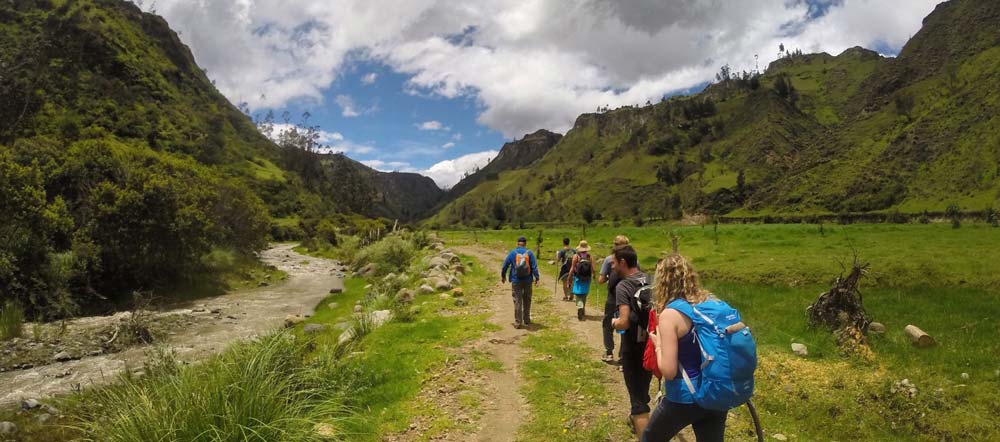
Volunteering doesn’t mean you can’t explore! Ecuador is small enough for amazing weekend escapes, with many of the following being
From Quito:
- Cotopaxi National Park
- Quilotoa Crater Lake
- Mindo
- Papallacta hot springs
From Cuenca:
- Cajas National Park
- Gualaceo artisan villages
From the Amazon:
- Baños
- Tena river rafting
From the Galápagos:
- Bartolomé Island
- Santa Fe Island
- Diving or snorkeling tours
Exploring Ecuador enriches your volunteering experience and helps you understand the country’s incredible culture and landscapes.
Why Ecuador Is an Amazing Destination for First-Time Volunteers
Ecuador is one of the safest, most welcoming, and most accessible countries in South America.
It’s easy to navigate, affordable, and full of community-based organizations happy to welcome volunteers.
Whether it’s teaching in the Andes, conserving wildlife in the Amazon, or supporting women-led initiatives in cloud forest villages, Ecuador offers countless ways to make a difference while traveling responsibly.
Volunteer in Equador Interview

Tell us a bit about yourself and why you love to travel.
I started a WordPress blog in 2015 for Creative Writing, and I started to follow a lot of travel bloggers. I really like reading about others’ experiences in their travels. I am a double major, studying pre-medical health sciences and Spanish as a foreign language.
Once I picked up Spanish, it is advised that you study abroad to have an immersion experience. This led me to a volunteer program in Ecuador and a study abroad program in Spain.
Tell us about your volunteer work in Pedernales, Ecuador?
Two years ago, Pedernales had a 7.8 magnitude earthquake that crushed the coast. I had registered for a volunteer abroad trip that travels to San Lorenzo, Ecuador. The members of the trip have an opportunity to shadow a local surgeon there as well as work in the clinic. Because of the natural disaster, the doctor and her co-workers at the clinic arranged for us to do relief work in Pedernales.
Once there, we worked on rebuilding a small hut for an elderly couple. While doing so, we made relief bags that we passed out to neighboring people and along the coast.
During our midday break from the building, the ladies from the San Lorenzo clinic held readings with the local children. Everyone who came to a reading received a relief/hygiene bag and was showed how to use everything in the bag. The hut was almost completely finished after 5 days of labor.
Why did you decide to volunteer in Ecuador?
I decided that I wanted to do something abroad, especially that provided a combination of my schooling.
My university has a club called Global Health Initiative, that partners with the Latin American Missions Board, which operates this annual trip. The clinic receives numerous volunteers each year and has different programs with different groups.
My Spanish advisor was the current mentor of the club and recommended that I give it a try, to ease myself in to traveling. This was the first time that I have ever left the United States.
Were there many challenges to volunteering in Ecuador?
Honestly, one of the biggest challenges was volunteering as a group. There can be a lot of different personalities within a group of college students. Because of this, it can make simple tasks much more difficult.
Aside from the group aspect, I would say a big challenge is acclimating to the different schedules there. Ecuadorians are accustomed to waking up with the sunrise, because of their location on the Equator. They eat very early and very late- which is another thing to get use to!
What was a typical day like whilst you were in Ecuador?
Because my trip to Ecuador was for volunteer work, a normal day consisted of working around the clinic where the group volunteered.
Before we headed off to Pedernales, we stayed in San Lorenzo and worked in a low-income clinic. Due to the intense sun and heat in the country, building maintenance is a must.
We worked on roofs, sanded and painted benches, painted walls, cleaned sidewalks, etc. It was a lot of hard work. Aside from the work, we were able to see the marketplaces. There were rows and rows of craft booths selling native items to Ecuador, such as fans and alpaca blankets.
What were some of the highlights of volunteering in Ecuador?
We were able to take a bus ride through the Andes mountain range to overlook the scenery. We took various trips to lakes and markets while in San Lorenzo.
In Pedernales, we went to the beach every night. Pedernales is right along the coast of the Pacific Ocean, and the beaches are clean and beautiful.
Because this was a medical mission trip, some of the volunteers had the opportunity to scrub in on minor surgeries. I worked on eye surgeries, removing cataracts and replacing lenses.
Where did you stay and how did you fund your time in Ecuador?
We actually were able to stay at the clinic with the doctor. She has a small building that has various rooms, a kitchen, and living space. This allows for volunteers to have a place to live while they are working at her clinic.
Funding was done through a combination of independent fundraising and school funds. Something that I recommend to college student travelers is to present your travel to the school travel committee. It was something that I didn’t know about, and if it is for educational purposes, the school may help with the funding.
What must pack items would you recommend?
Definitely bring mosquito repellent. When we were living in Pedernales, we slept outside mosquito nets. Due to the earthquake, the homes were mostly destroyed or unstable. It was always great weather, but the bugs were unbearable. I would bring a sunhat to shield your face from the sun, plenty of sunscreen and lotion, and light/lose clothing!
What advise would you give to others who want to volunteer in countries after natural disasters?
Be prepared. Everyone has seen images of natural disasters on commercials but seeing it in real life is much more devastating. Especially in smaller countries, disasters such as this strike much harder. The community is already small, and an earthquake demolishes things that everyone needed.
The most beautiful thing about relief work is that though everything around you, every physical piece of the area is broken, the hope these people have is never broken.
Best Places to visit in South America
Volunteer in Ecuador FAQ
Do I need a visa to volunteer in Ecuador?
- Most travelers receive a 90-day tourist visa on arrival.
- Short-term volunteering is allowed on a tourist visa.
- For longer stays, you can apply for a 90-day extension or a volunteer/temporary residency visa.
How much does it cost to volunteer in Ecuador?
- Mainland programs typically cost US$250–$700 per week.
- Galápagos programs range from $700–$1,500 per week.
- Fees often include accommodation, meals, project costs, and support staff.
- Additional expenses include flights, insurance, visas, and weekend travel.
Is volunteering in Ecuador safe?
- Yes—Ecuador is generally safe for volunteers.
- Use standard precautions such as avoiding unlit areas, using registered taxis, and safeguarding valuables.
- Always follow guidance from your program staff and host families.
Do I need to speak Spanish to volunteer?
- Not always, but basic Spanish significantly improves communication.
- Some teaching, health, or community roles require conversational Spanish.
- Many organizations offer optional Spanish lessons.
What types of volunteer programs are available?
- Teaching and education support
- Wildlife rescue and rehabilitation
- Cloud forest and Amazon conservation
- Galápagos ecological projects
- Community development
- Women’s empowerment initiatives
- Public health and medical outreach
How long should I volunteer in Ecuador?
- Short stays: 1–2 weeks for introductory or wildlife programs
- Medium stays: 3–6 weeks for teaching or conservation projects
- Long-term stays: 2–3 months or more for deeper impact
Where are the best places to volunteer in Ecuador?
- Quito – education, community, and urban programs
- Cuenca – cultural, social, and educational projects
- Amazon (Puyo, Tena) – wildlife rescue and rainforest conservation
- Mindo – cloud forest conservation
- Otavalo & highland villages – indigenous community development
- Galápagos Islands – marine and terrestrial conservation
Can I volunteer in the Galápagos Islands?
- Yes—programs are available but more regulated and expensive.
- Volunteers often help with invasive species removal, habitat restoration, and wildlife monitoring.
- Conservation standards are strict to protect fragile ecosystems.
What qualifications do I need?
- Most programs require volunteers to be 18+ and in good physical condition.
- Teaching roles may request TEFL certification or teaching experience.
- Medical placements require relevant studies or credentials.
What should I pack for volunteering in Ecuador?
- Sturdy shoes and long-sleeved, lightweight clothing
- Rain jacket and quick-dry layers
- Insect repellent and sunscreen
- Reusable water bottle and headlamp
- Personal medications and basic first-aid supplies
- Work gloves and clothing you don’t mind getting dirty for conservation roles
Is it ethical to volunteer in Ecuador?
- Yes—if you choose a responsible organization.
- Look for programs that are community-led, transparent, and environmentally respectful.
- Avoid projects that allow wildlife handling or replace local jobs with volunteers.
Stay Creative!
Thank you for your support and love for Creative Travel Guide. If you are looking for more video tips, make sure to head over to your YouTube channel and follow us on Instagram for daily tips and chats.
Share any questions or comments below and happy creative travels!
THE SOUTH AMERICA BUCKET LIST - Creative Travel Guide
Tuesday 9th of December 2025
[…] Volunteering in Ecuador is also a great way to experience the country and see the sights as you immerse yourself in the culture. […]
10 Best Islands to Visit in the World - Creative Travel Guide
Tuesday 9th of December 2025
[…] is a great place to visit for those looking to volunteer in Ecuador and then explore the […]
BEST PLACES TO LIVE IN THE WORLD • Creative Travel Guide
Wednesday 7th of July 2021
[…] VOLUNTEER ABROAD: RELIEF WORK IN ECUADOR […]
35 WAYS TO MAKE MONEY WHILE TRAVELING • Creative Travel Guide
Monday 4th of May 2020
[…] and food in return for your time. Read about how Natalie volunteered in Fiji, Ashley volunteered in Ecuador and Anna-Maia volunteered in Cape […]
VOLUNTEER ABROAD: TEACHING ENGLISH IN MEXICO • Creative Travel Guide
Monday 29th of April 2019
[…] VOLUNTEER ABROAD: RELIEF WORK IN ECUADOR […]